
The Protection Backpack
Innovation Project by Robo Gators of the Lost Park (FLL Team #64434) 2025–26 Unearthed Season
Research
Our team started by learning about archaeology from multiple sources. Pastor Andrew Raduly shared his experience in Egyptian archaeology, teaching us how archaeologists use details and clues, take careful notes, create grid systems at dig sites, and plan ahead. We also studied resources from the Archaeological Institute of America and the Florida Division of Historical Resources.
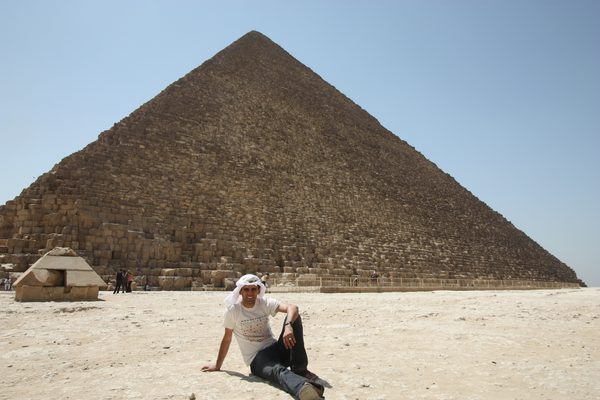
We learned that archaeology involves many steps: researching, planning, prepping a site, digging, uncovering and preserving artifacts, and sharing findings. Each step comes with its own challenges.
Identifying a Problem
As a team, we brainstormed on a whiteboard using color coding — purple for what archaeologists do, red for problems they face, and blue for possible solutions. We wanted to come up with at least one solution for every problem.
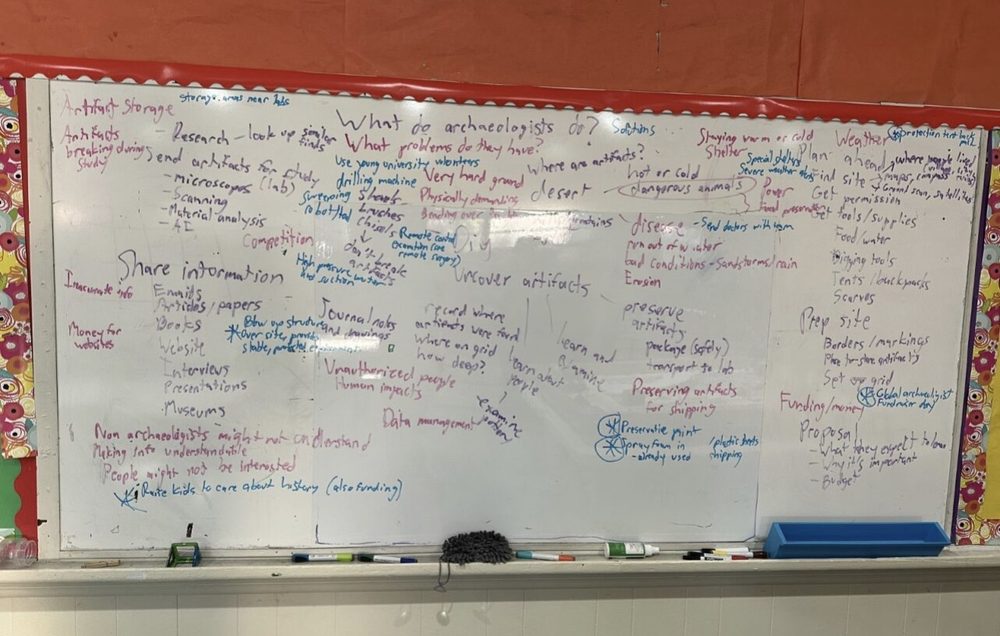
We narrowed our ideas down to six possible solutions:
- Preservative paint (for protecting artifacts)
- Spray foam (for packing artifacts)
- Global archaeologist fundraiser day
- Protection backpack (for adverse weather)
- Raise kids to care about history
- Blow-up structure (for a steady environment)
After further research, we eliminated options that already existed or weren’t practical:
- Preservation paint could change an artifact’s chemical composition
- Spray foam for shipping already exists
- National Archaeology Day already exists (3rd Saturday of October)
- Blow-up structures are already used by archaeologists
- We will not have kids for a long time 😄
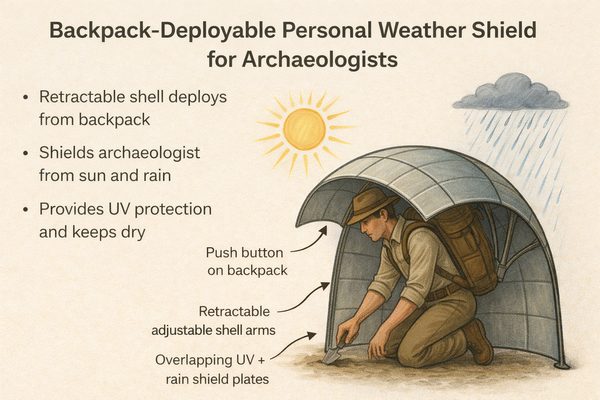
Final decision: The Protection Backpack — a portable weather shield that doesn’t currently exist in this field.
Here is an AI-generated concept of our idea:
Expert Feedback
We shared our idea with three professional archaeologists and incorporated their feedback:
Dr. Maranda Almy Kles, PhD, RPA
President, Archaeological Consultants, Inc.
“The backpack sounds very useful in certain settings. You would just want to be sure it is lightweight because archaeologists walk a lot and have to carry other tools.”
Josie M. Ketten
Senior Archaeologist, Florida Department of State
“I think this would be very helpful in some situations. Would there be space for storage of other protective equipment and archaeological tools? How heavy is this? How resistant to wind is it? Can you see through the structure at all? Honestly, I would love a protective shell from the elements and I think it would be incredibly helpful in many field situations.”
Allisen Hunter, M.A.
Objects Conservator, Florida Department of State
Highlighted that keeping archaeologists dry is important for morale and comfort, and that shade extends working hours in high temperatures. She noted the backpack would also keep soil dry — important because archaeologists observe soil texture and color changes to determine artifact dates. She suggested considering different materials for heat vs. rain protection.
Key Takeaways
Based on the feedback, we focused on:
- Making the backpack lightweight
- Including room for additional storage
- Ensuring you can see your surroundings
- Using fabric that is both heat-protectant and waterproof
Prototypes
Prototype 1
A simple model made from an umbrella and a small lightweight backpack.
Pros:
- Works well in the heat
- Keeps you cool
- Can take off and set next to you for shade
Cons:
- Does not work well in the rain (leaks water into dig area)
- Does not cover back from rain
- Hard to keep stabilized — wobbly in the wind
Prototype 2
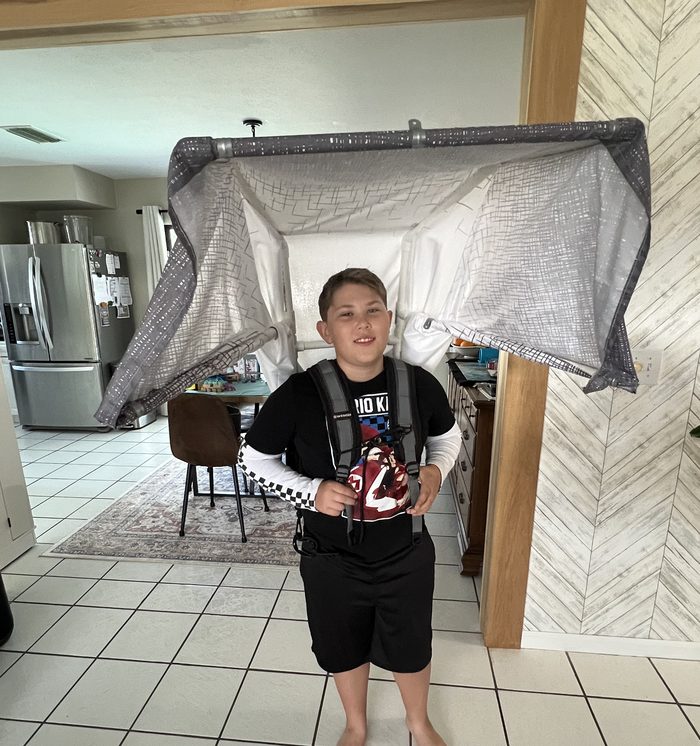
A more robust model made from PVC pipe and a shower curtain with a bigger backpack for tool storage. The PVC frame is adjustable — it can extend out for full coverage or collapse down to fit in smaller spaces. Before the mock dig, we extended the frame higher so it wouldn’t hit the back of the wearer’s head.
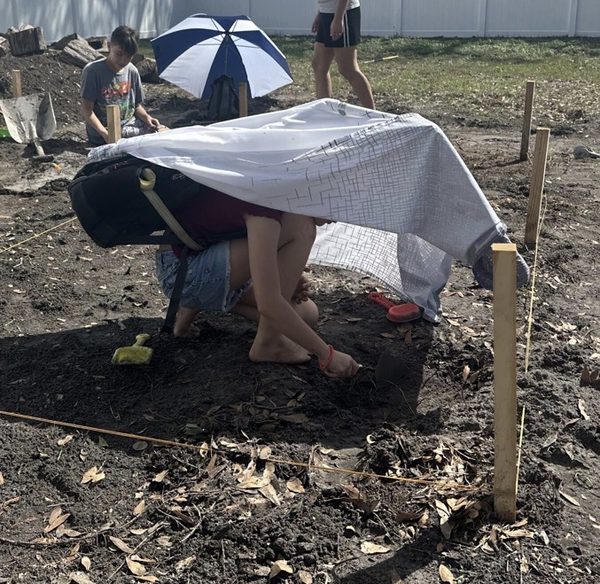
Pros:
- Works well in both rain and sun
- See-through on the sides
- Sturdy materials
- Adjustable height and width
Cons:
- A little heavy
- Side fabric flaps in the wind
Testing at a Mock Dig
To test our prototypes in real conditions, we organized a mock archaeological dig:
- Researched where to have a dig site — chose a location with good soil and materials
- Planned ahead — gathered tools, made prototypes, checked weather
- Prepped the site — used a skid steer to scrape the top layer, measured out a 12’×12’ grid
- Dug carefully — scraped small layers of soil, used trowels, brushes, and shovels
- Uncovered artifacts — categorized findings into three groups (A: Trash, B: Rocks, C: Other), and used grid coordinates and depth measurements to record exactly where each item was found
- Tested prototypes in both rain and sun conditions
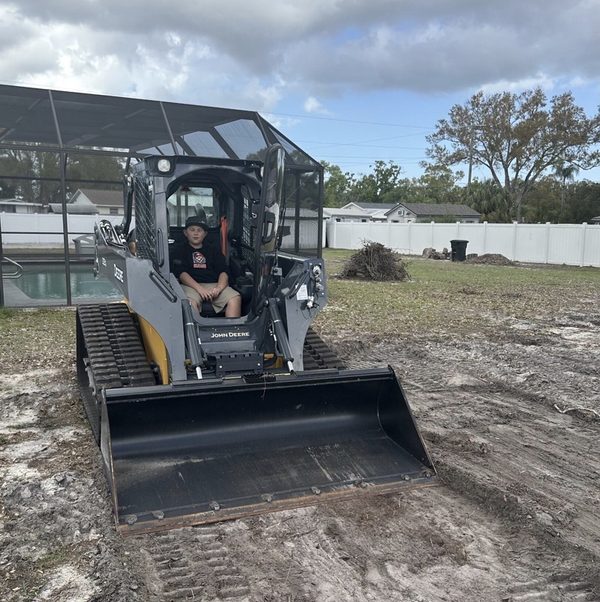
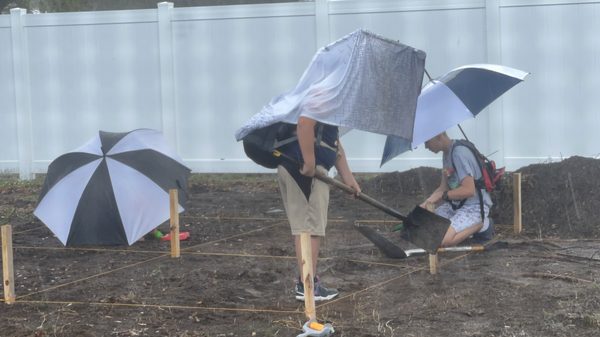
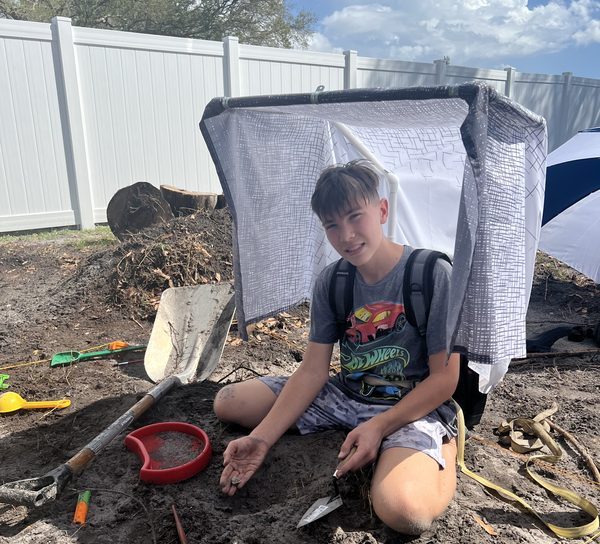
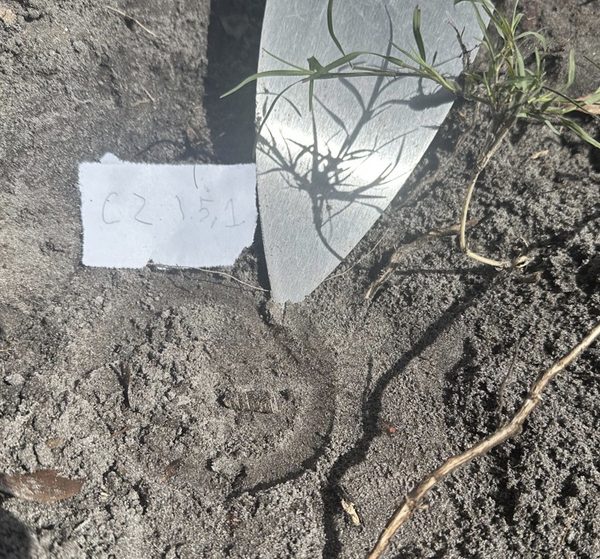
We got to experience firsthand what archaeologists go through and test our protection backpack in real field conditions!
Improvements After the Mock Dig
Based on what we learned at the dig, we made further improvements to Prototype 2:
- Added two more pieces of PVC pipe on the sides to hold the fabric in place, preventing it from flapping in the wind
- Added clamps so the frame stays attached to the backpack more tightly
Sharing With Our Community
We didn’t stop at expert feedback — we also shared our solution with a wider community to gather more perspectives.
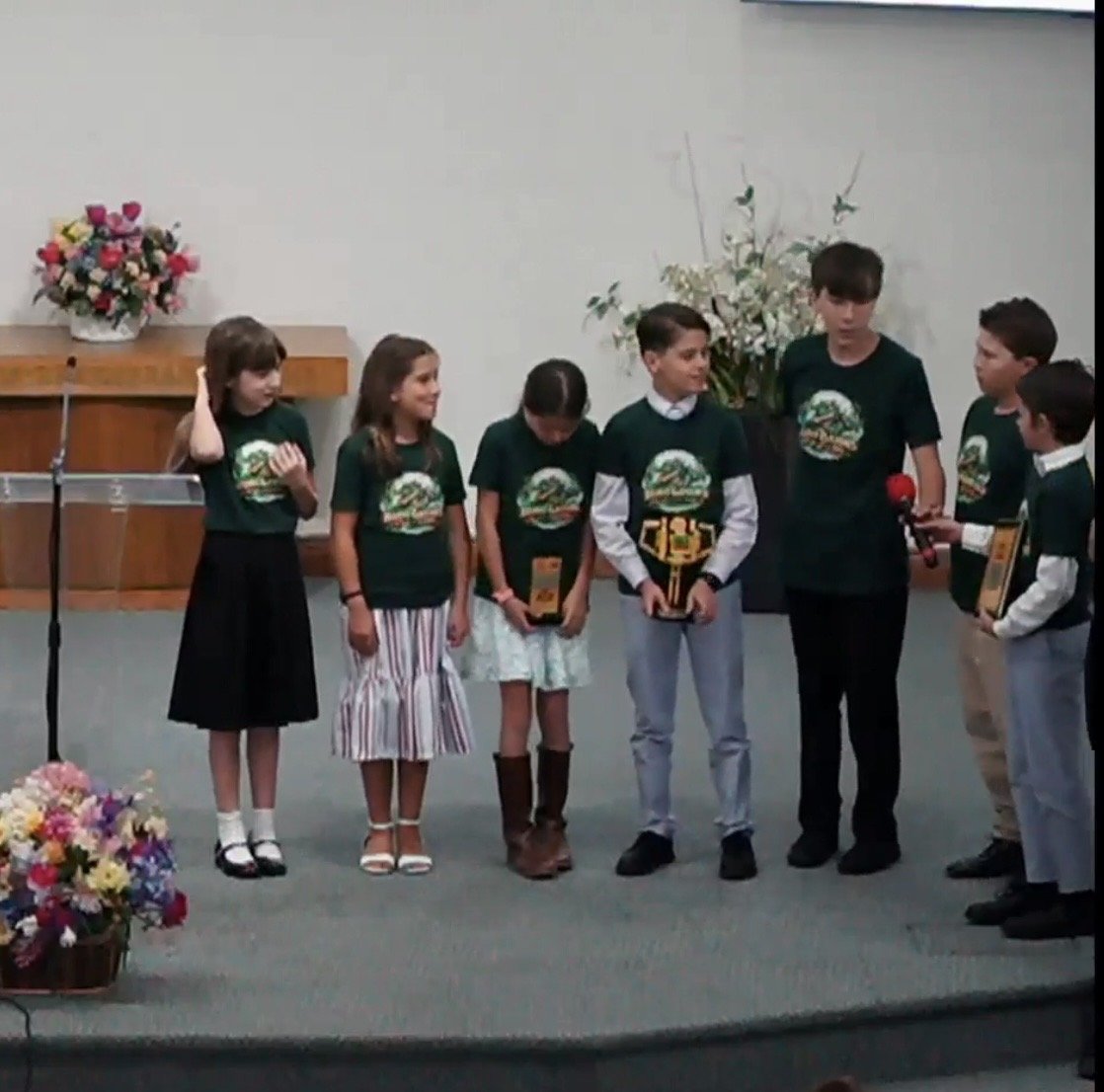
Church Presentations
We presented our innovation project at three different churches in our community.
School Robotics Night
We also shared our solution at a school robotics night, where we let people try on the backpack and give us feedback.
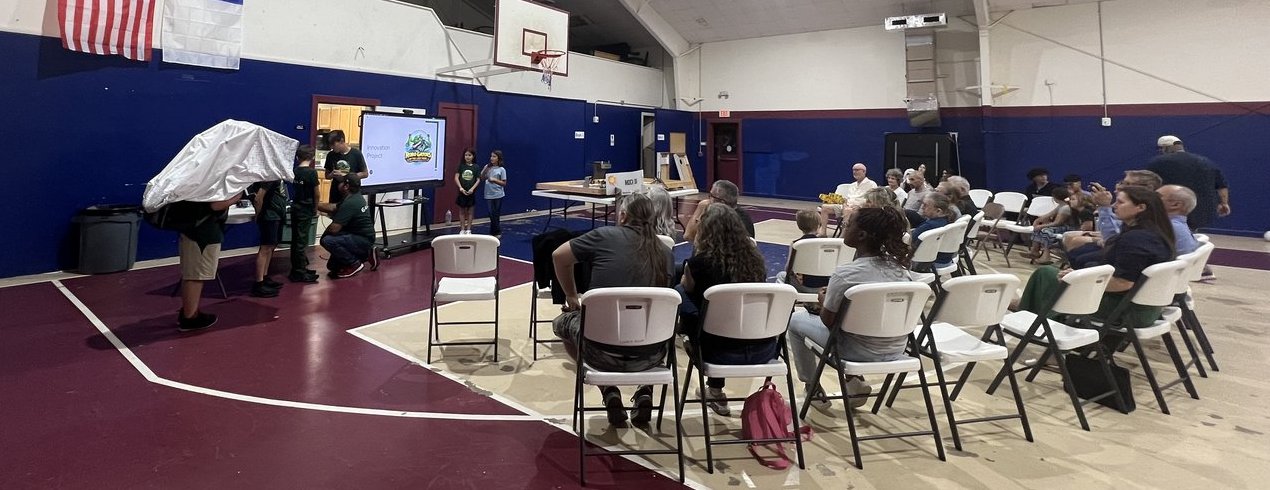
People said the backpack was comfortable and lightweight, but a few mentioned it was hard to see through the sides. Their suggestions for improvement included:
- Clear sides instead of opaque fabric
- Velcro windows that can open and close
- A built-in water sipping pack for hydration
- An ice pack pocket to stay cool
Professional Manufacturing Feedback
To learn how a real product like ours could be manufactured, we reached out to outdoor gear companies. Bill Van Pelt, a Customer Service Representative at Johnson Outdoors (Eureka! Camping and Jetboil), wrote back with detailed advice:
“Your creative idea has excellent merit. Most modern camping tents are made using a combination of PU (polyurethane) coated polyester (approx 68–75 Denier) and ‘No-See-Um’ polyester netting (approx 40 Denier). Beyond that, zippers and hook-and-loop (Velcro) closures are needed. Sewn areas of the shelter are done using polyester thread. Polyester fabrics and thread provide the greatest resistance to sunlight (UV radiation) and do not absorb as much moisture as synthetic fabrics such as nylon. This means greater durability in the finished product.”
“I wish you the very best luck developing your excellent idea!”
Materials for Manufacturing
Based on Bill’s advice, a production version of the Protection Backpack would be made from:
- Tent poles (instead of PVC pipe) for a lighter, collapsible frame
- Polyurethane-coated polyester for the canopy
- Polyester “No-See-Um” netting for see-through, bug-proof side panels
- Zippers and Velcro for adjustable openings and windows
- Polyester thread for durable, UV-resistant seams
- A lightweight backpack to carry it all and store tools
Our Final Product
Putting all the feedback together — from archaeologists, our community, and a tent industry expert — here is our concept for the finished Archaeologist Field Pack with Integrated Shelter Canopy:
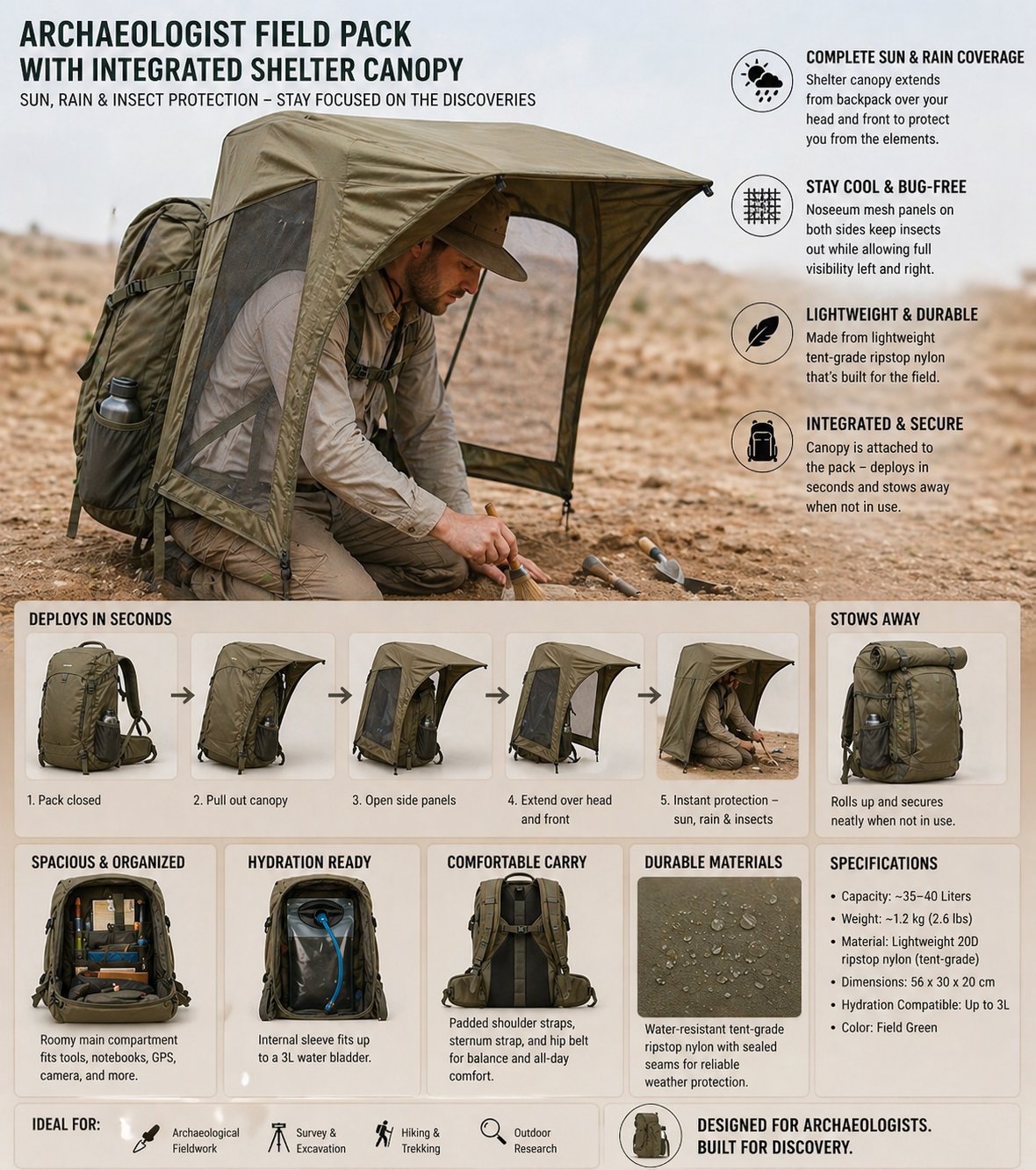
The final design deploys in seconds: pull the canopy out of the pack, open the side panels, and extend it over your head and front for instant protection from sun, rain, and insects. When you’re done, it rolls back up and stows neatly in the pack.
Conclusion
The Protection Backpack is a portable, lightweight weather shield designed to help archaeologists work comfortably in extreme conditions. Based on feedback from professional archaeologists, our community, an industry manufacturing expert, and real-world testing at our mock dig, we refined our design to be sturdy, see-through, and practical for field use. We believe this solution could help archaeologists stay dry, cool, and productive — allowing them to focus on what they do best: uncovering the past.